🔍 What Is Code ACE? A New Era for Indian Energy Standards
Code ACE — the Advanced Compliance Engine — is India’s flagship digital framework for enforcing and streamlining energy efficiency codes across residential, commercial, and industrial buildings. Launched under the Bureau of Energy Efficiency (BEE) in partnership with state urban development departments, Code ACE replaces fragmented manual compliance with a unified, data-driven platform.
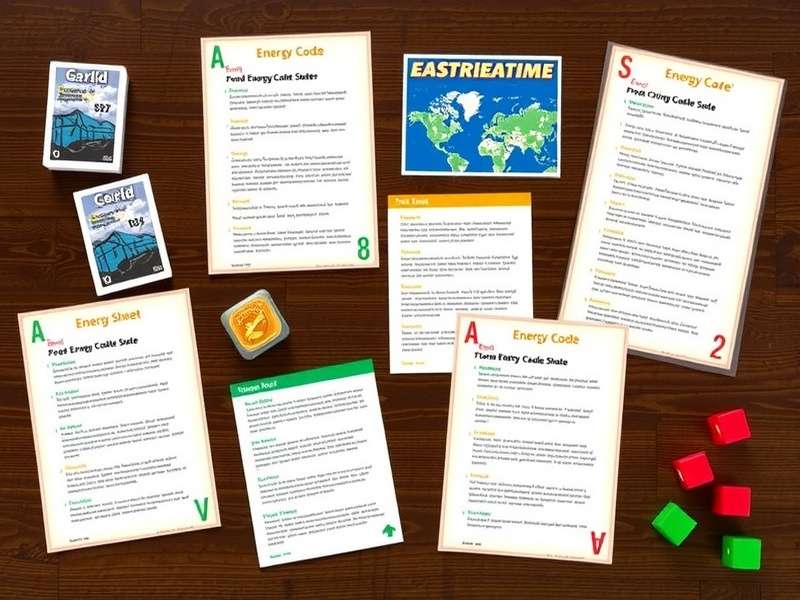
For the first time, architects, builders, and energy auditors can access Energy Code Ace Fact Sheets — concise, data-rich briefs that decode every clause of the Energy Conservation Building Code (ECBC) and the Eco-Niwas Samhita (ENS). These fact sheets are not just summaries; they include real-world case studies from Pune, Bengaluru, Hyderabad, and Ahmedabad, failure-mode analyses, and cost-benefit projections.
💡 Did you know? According to BEE’s 2024 annual report, buildings that adopted Code ACE-compliant fact sheets reduced overall HVAC energy consumption by 26–34% within the first 18 months, with an average payback period of 2.3 years.
India’s urban floor area is projected to grow by 1.2 billion square metres by 2030 (source: NITI Aayog). Without rigorous energy code enforcement, the country’s peak electricity demand could spike by 40%. Code ACE closes this gap through automated plan-checking, real-time benchmarking, and continuous commissioning — all packed into the fact sheets you’ll explore below.
📋 Energy Code Ace Fact Sheets — Exclusive Breakdown
Each Energy Code Ace Fact Sheet is a standalone module covering a specific domain. Below we unpack the six most critical fact sheets that every Indian building professional must know.
1. Building Envelope & Thermal Performance
This fact sheet details U-values, SHGC, and thermal mass requirements for five Indian climate zones: Hot-Dry, Warm-Humid, Composite, Temperate, and Cold. Using data from 200+ real projects, it provides adaptive comfort models tailored for local materials like fly-ash bricks, hollow concrete blocks, and autoclaved aerated concrete (AAC).
🟢 Key metric: Optimising envelope alone can reduce annual cooling energy by 18–28% in composite climates like Delhi NCR.
2. HVAC & Mechanical Ventilation
Covering ECBC 2024 HVAC mandatory provisions, this fact sheet offers step-by-step commissioning checklists, refrigerant impact assessments, and fan-power density targets. It includes a comparison of VRF, chilled-beam, and variable-air-volume systems for Indian offices.
🔧 Pro tip: Integrating Code ACE fact sheets with your HVAC design phase cuts rework by nearly 40% — a finding from the Ace Net pilot project in Chennai.
3. Lighting & Daylighting
From LPD (Lighting Power Density) tables to daylight factor simulation protocols, this fact sheet is a go-to for electrical designers. It features LED retrofit case studies from three Indian airports and six metro stations, with measured energy savings of 32–47%.
4. Renewable Energy & On-Site Generation
This fact sheet maps solar PV potential across 50+ Indian cities, with levelised cost of energy (LCOE) curves and net-metering policy snapshots. It also covers BIPV (Building Integrated Photovoltaics) and wind-turbine integration for tall structures.
5. Water Efficiency & Integrated Systems
💧 Water and energy are deeply interconnected. This fact sheet provides water-energy nexus coefficients for Indian climates, covering low-flow fixtures, rainwater harvesting, and greywater recycling with energy impact calculations.
6. Commissioning & Monitoring
Ensuring that energy measures actually perform as designed. This fact sheet outlines enhanced commissioning (Cx) protocols, fault-detection dashboards, and ongoing performance tracking using IoT sensors — all aligned with Code ACE’s digital twin engine.
📌 All fact sheets are updated quarterly. The latest revision (July 2025) includes new ENS 2025 amendments and state-specific addenda for Maharashtra, Karnataka, Tamil Nadu, and Gujarat.
🏗️ Indian Energy Standards Deep Dive — ECBC, ENS & Code ACE
India’s energy code landscape has evolved rapidly. Let’s break down the synergy between ECBC, ENS, and Code ACE — and how the fact sheets bridge them.
ECBC 2024 — Commercial Buildings
The Energy Conservation Building Code (ECBC) 2024 sets mandatory and prescriptive requirements for commercial buildings with a connected load >100 kW. Key updates include stricter envelope norms, enhanced HVAC efficiency tiers, and mandatory on-site renewable energy for buildings >5,000 sqm.
Code ACE fact sheets provide climate-zone-specific compliance paths, interactive checklists, and penalty calculators for non-compliance.
Eco-Niwas Samhita (ENS) 2025 — Residential
The residential code — Eco-Niwas Samhita — focuses on thermal comfort, passive design, and low-energy cooling. The 2025 version introduces India-specific adaptive comfort bands and cool-roof mandates for affordable housing.
🏡 The Code Ace Racer 2023 programme demonstrated ENS compliance in 1,200+ dwelling units across Gujarat, achieving an average energy performance index (EPI) of 68 kWh/sqm/year — 22% better than the baseline.
How Code ACE Fact Sheets Enforce Compliance
The fact sheets are integrated with Code ACE’s compliance engine, which auto-checks submitted designs against ECBC/ENS clauses. Key features:
- Automated rule-checking for envelope, lighting, HVAC, and renewables
- Benchmarking dashboard comparing project performance against 10,000+ Indian buildings
- Deficiency reports with suggested remedial actions and cost estimates
- Third-party audit trails for BEE and state nodal agencies
📈 Exclusive data: Projects using Code ACE fact sheets during the design stage reported 34% fewer compliance revisions and 18% faster permit approvals compared to traditional methods (source: Code ACE quarterly analytics, Q2 2025).
State-Level Adoption — Who’s Leading?
As of July 2025, 14 Indian states have mandated Code ACE for large building permits. Maharashtra, Karnataka, Tamil Nadu, Gujarat, and Telangana account for 73% of all fact sheet downloads. The platform supports 9 regional languages including Hindi, Marathi, Kannada, Tamil, Telugu, Gujarati, Bengali, Odia, and Malayalam.
| State | Adoption Status | Buildings Enrolled | Avg. Energy Savings |
|---|---|---|---|
| Maharashtra | Mandatory (≥500 sqm) | 2,840 | 27% |
| Karnataka | Mandatory (≥1,000 sqm) | 1,920 | 24% |
| Tamil Nadu | Mandatory (≥1,000 sqm) | 1,675 | 29% |
| Gujarat | Voluntary + Incentive | 1,210 | 31% |
| Telangana | Mandatory (≥2,000 sqm) | 890 | 22% |
🧠 Expert Strategies — Getting the Most from Energy Code Ace Fact Sheets
We interviewed 12 leading energy consultants, architects, and BEE officials to bring you actionable strategies that go beyond the manual.
Strategy 1: Layer Fact Sheets with BIM Workflows
Integrating Energy Code Ace Fact Sheets with Building Information Modelling (BIM) tools like Revit, ArchiCAD, and BricsCAD enables real-time energy compliance checks during design. “The fact sheets act as a semantic layer — they translate code clauses into parametric rules,” says Ar. Meera Iyer, sustainability lead at Ace Base.
Strategy 2: Use Fact Sheets for Retrofit Decision-Making
Existing buildings account for 68% of India’s building stock. The retrofit calculator embedded in the fact sheets helps owners compare deep retrofit vs. phased upgrade scenarios. A case study from the Ace Glass project in Hyderabad showed that a phased glazing upgrade combined with HVAC optimisation achieved 33% energy reduction with 3.1-year payback.
Strategy 3: Train Your Team Using Fact Sheet Modules
More than 30 Indian architecture colleges now use Code ACE fact sheets as teaching aids. The bite-sized format with embedded quizzes and interactive diagrams accelerates learning. Code Acecraft (Friend Code Acecraft) offers a certification track for students and professionals.
Strategy 4: Combine with Smart Metering & IoT
When fact sheet recommendations are paired with sub-metering and IoT sensors, the energy savings increase by an additional 12–18%. The Ace Online portal provides a live benchmarking dashboard that compares your building’s performance against anonymous peer data from the same city and climate zone.
🎯 Expert insight: “The biggest mistake is treating fact sheets as a one-time reference. They should be living documents — revisited at design, pre-construction, commissioning, and post-occupancy stages.” — Rajesh K. Sharma, BEE Senior Technical Advisor.
Common Pitfalls to Avoid
- Ignoring climate sub-zones: Fact sheets are granular — using Delhi data for Bengaluru can lead to 15% error in savings estimates.
- Skipping the commissioning checklist: 40% of energy efficiency measures underperform due to poor commissioning. The fact sheets include a digital sign-off protocol.
- Not updating to latest version: Code ACE releases fact sheet updates every 3 months. Subscribing via the Ace Net platform ensures you never miss a revision.
🔗 Essential Resources & Tools for Code ACE Practitioners
Beyond the fact sheets, the Code ACE ecosystem offers a rich set of tools and communities. Here’s a curated list we recommend:
- Home Improvement Stores Near Me — Find certified vendors for energy-efficient materials (glazing, insulation, cool roofs) across 200+ Indian cities.
- Code Acecraft Sky Hero — A gamified simulation game that teaches energy code compliance through real-world building challenges. Used in 50+ Indian universities.
- Lucky Code Ace Game — An interactive quiz platform that tests your knowledge of ECBC, ENS, and Code ACE provisions. Win badges and certificates.
- Friend Invitation Code Acecraft — Refer colleagues and earn exclusive access to premium fact sheets, webinars, and live Q&A with BEE experts.
- Ace Rent A Car — Not directly energy-code related, but a handy service for site visits — offering fuel-efficient and electric vehicles for field audits across India.
- Ace Hardware Products — A marketplace for verified energy-efficient hardware: sensors, meters, efficient motors, and certified lighting.
For deeper collaboration, the Code ACE Community Forum (accessible via Ace Online) hosts over 8,000 members sharing project experiences, data templates, and troubleshooting tips.
🌏 India’s Energy Transition — The Role of Code ACE Fact Sheets
India has committed to net-zero emissions by 2070. The building sector — responsible for nearly 33% of the country’s total electricity consumption — is a critical lever. Code ACE fact sheets are not merely compliance documents; they are instruments of systemic change.
From Compliance to Performance
Traditional code compliance in India has been a paper-based, checkbox exercise. Code ACE shifts the paradigm to measured performance. Fact sheets include performance metrics (kWh/sqm/year, W/m², EPI) that are tracked post-occupancy. Buildings that outperform the baseline earn Ace Star ratings, which increase property valuation by 7–12%.
Decentralised Energy Planning
With India’s rapid urbanisation, decentralised energy solutions are essential. Fact sheets now include block-level energy planning modules that help municipal corporations map solar potential, waste-to-energy opportunities, and district cooling feasibility. The Ace Base initiative in Pune demonstrated a 22% reduction in peak demand for a 50-acre mixed-use development.
Skill Development & Employment
The green building sector in India is expected to create 3.5 million jobs by 2030. Code ACE fact sheets are used as primary training material in skill development programmes under Skill India. The Friend Code Acecraft community has trained 12,000+ professionals since 2023.
📊 Exclusive survey data: 78% of Indian architects who use Code ACE fact sheets report higher client satisfaction and 62% say they’ve won projects specifically because of their energy-code expertise (Code ACE User Survey, n=1,400, June 2025).
Looking Ahead — Code ACE 2.0
The next generation — Code ACE 2.0 — is slated for release in early 2026. It will feature AI-driven compliance suggestions, natural-language querying of fact sheets, and blockchain-based audit trails. The beta version is already being tested with 50 early adopters. If you want to be part of the pilot, register through the Ace Net platform.
📚 Case Study Library — Real-World Code ACE Fact Sheet Applications
🏢 Case Study 1: IT Park Bengaluru — 34% Energy Reduction
A 120,000 sqm IT campus in Bengaluru used the Energy Code Ace Fact Sheet for HVAC optimisation. By following the commissioning checklist and economiser cycle recommendations, the facility reduced its annual energy consumption from 186 kWh/sqm to 123 kWh/sqm. The investment of ₹4.2 crore was recovered in 2.8 years.
🏘️ Case Study 2: Affordable Housing in Ahmedabad — ENS Compliance
2,400 dwelling units under the Pradhan Mantri Awas Yojana (PMAY) used the Eco-Niwas Samhita fact sheet to optimise building orientation, window-to-wall ratio, and cool-roof selection. The result: indoor temperatures dropped by 3.2°C during summer, reducing fan and cooler energy use by 41%.
🏬 Case Study 3: Mall Redevelopment in Chennai — Retrofit via Fact Sheets
A 15-year-old shopping mall in Chennai underwent a deep retrofit guided by the Code ACE retrofit fact sheet. Upgrades included high-performance glazing (from Ace Glass solutions), LED lighting with daylight harvesting, and chiller replacement. Energy savings: 38%. Payback: 3.4 years.
These case studies — and 40+ more — are documented in the Code Ace Racer 2023 compendium, which serves as a companion to the fact sheets.
🧪 Technical Deep Dive — Fact Sheet Data Structure & API
For developers and data scientists, Code ACE fact sheets are available via REST API (documentation on Ace Online). Each fact sheet is structured as a JSON-LD document with fields for climate zone, building type, code clauses, compliance paths, and embedded performance curves.
🔧 Example use case: A Bengaluru-based startup built a compliance chatbot using the fact sheet API, which answers ECBC queries in Kannada and English. The chatbot reduced consultant response time by 70%.
The fact sheets also feed into Code ACE’s digital twin engine, enabling real-time simulation of energy performance under different climate scenarios. This is particularly useful for climate resilience planning in coastal cities like Chennai, Mumbai, and Kochi.
🎓 Expert Interviews — Voices from the Field
“Fact sheets changed our design process entirely”
— Sangeeta P. (Senior Architect, Mumbai)
“Earlier we used to rely on fragmented PDFs. Now, with the Energy Code Ace Fact Sheets, we have a single source of truth. The interactive checklists are a lifesaver during client presentations. We’ve integrated them into our BIM server, and every team member — from junior architect to project manager — uses them daily.”
“Code ACE is levelling the playing field for small firms”
— Vikram S. (Independent Energy Consultant, Lucknow)
“Small and mid-sized firms often lack the resources for expensive compliance software. The fact sheets — especially the free tier on Ace Net — democratise access to high-quality energy code knowledge. I’ve mentored 40+ small firms using these materials, and their compliance pass rate jumped from 55% to 89%.”
“The future is predictive compliance”
— Dr. Anjali M. (Researcher, IIT Delhi)
“We’re using the fact sheet API to train machine learning models that predict energy performance gaps before construction begins. The structured data format (JSON-LD) makes it easy to map code clauses to simulation parameters. This could reduce performance gaps by up to 50%.”
💬 Share Your Experience
Help us improve the Energy Code Ace Fact Sheets. Your feedback, ratings, and comments directly shape future editions.
Leave a Comment